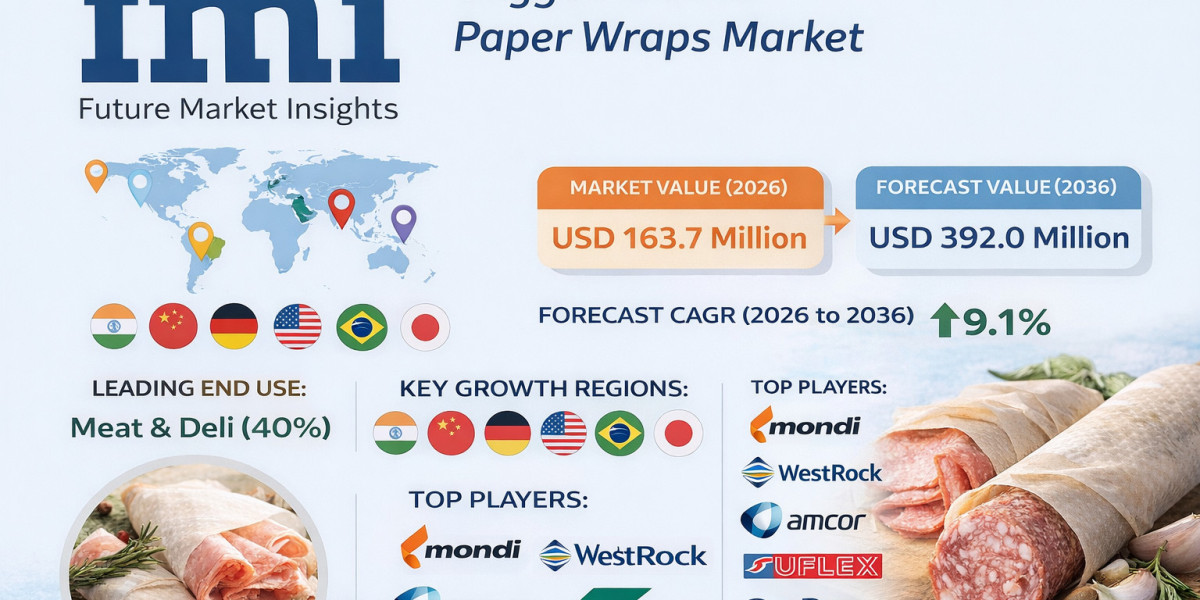

Oxygen-Barrier Paper Wraps Market is entering a decisive transformation phase as sustainability mandates, plastic reduction targets, and advancements in fiber-based barrier technology reshape the global packaging landscape. Valued at USD 3.80 billion in 2026, the market is projected to expand to USD 6.10 billion by 2036, reflecting a steady CAGR of 4.9% over the forecast period.
According to the latest industry outlook from Future Market Insights (FMI), growth is no longer driven solely by niche eco-friendly brands. Instead, it is being powered by multinational food and consumer goods manufacturers that are aggressively redesigning packaging portfolios to meet recyclability requirements and extended producer responsibility (EPR) regulations—without compromising oxygen barrier performance or product shelf life.
Request Sample Report - https://www.futuremarketinsights.com/reports/sample/rep-gb-30126
The Sustainability Pivot: From Plastic Dependence to Fiber Innovation
For decades, flexible packaging relied heavily on multi-layer plastic laminates to prevent oxygen ingress and maintain freshness. In 2026, that paradigm is shifting. Oxygen-barrier paper wraps are emerging as viable high-performance alternatives, combining renewable fiber substrates with advanced water-based and bio-polymer coatings that significantly reduce oxygen transmission rates.
Brands are increasingly prioritizing packaging that aligns with circular economy goals while maintaining sealing integrity and product stability. This shift is particularly evident in the food packaging segment, which accounts for the majority of demand.
Technology Intensification: Engineering Barrier into Paper
One of the primary drivers of market expansion is rapid innovation in coating and lamination technologies. Modern oxygen-barrier wraps are engineered to maintain structural integrity and barrier efficiency through demanding packaging environments, including:
- High-speed heat-sealing lines
- Modified Atmosphere Packaging (MAP) processes
- Cold-chain logistics for chilled and dairy products
- Dry snack and confectionery packaging applications
Coated paper formats currently dominate the market, accounting for nearly 70% of total demand due to their balance between recyclability and oxygen resistance. However, fully recyclable mono-material fiber solutions are gaining traction as brands move toward simplified material structures that support established recycling streams.
Regional Dynamics: Europe Leads, Asia-Pacific Accelerates
While adoption is global, regional growth trajectories vary significantly.
Europe (5.2% CAGR) remains the regulatory leader, driven by stringent single-use plastic directives and aggressive recycling targets. Packaging manufacturers across Germany, France, and Scandinavia are rapidly scaling fiber-based barrier technologies to comply with EU sustainability frameworks.
United States (4.5% CAGR) is witnessing steady expansion, supported by retailer sustainability commitments and consumer pressure to reduce plastic waste. Major food brands are piloting oxygen-barrier paper wraps for snack and frozen food categories.
China (5.8% CAGR) is emerging as the fastest-growing market, fueled by green manufacturing policies and the modernization of domestic food processing infrastructure. Investments in advanced coating lines are strengthening regional supply capabilities.
Key Market Metrics (2026–2036)
· Market Value (2026): USD 3.80 Billion
· Forecast Value (2036): USD 6.10 Billion
· Projected CAGR (2026–2036): 4.9%
· Dominant Format: Coated Paper Wraps – 70% market share
Navigating Constraints: Cost and Regulatory Complexity
Despite positive momentum, challenges remain. Advanced oxygen-barrier coatings can increase production costs compared to conventional paper packaging, limiting penetration in cost-sensitive markets. Raw material volatility in pulp and specialty coating chemicals also impacts margin stability.
Additionally, recyclability standards vary across regions, creating certification complexities for manufacturers operating in multiple jurisdictions. Achieving high oxygen resistance while maintaining compostability or recyclability requires ongoing R&D investment and cross-industry collaboration.
Competitive Landscape: Innovation-Led Consolidation
The competitive landscape is moderately consolidated, with leading fiber and packaging innovators investing heavily in barrier technology. Companies such as Stora Enso, Mondi Group, Smurfit Kappa, and UPM-Kymmene are expanding their sustainable barrier portfolios.
Strategic differentiation increasingly centers on:
Water-based and bio-derived coating innovations
Enhanced oxygen transmission rate (OTR) reduction
Compatibility with high-speed packaging lines
Scalable manufacturing processes with lower carbon footprints
The Outlook: From Alternative to Industry Standard
By 2036, oxygen-barrier paper wraps are expected to transition from a sustainable alternative to a mainstream packaging standard in select food and consumer goods categories. As circular economy policies tighten and plastic reduction targets become more aggressive, fiber-based barrier solutions will play a central role in packaging transformation strategies.
With improving performance parity and strengthening sustainability credentials, the Oxygen-Barrier Paper Wraps Market is positioned for steady, innovation-driven growth through the next decade.
For an in-depth analysis of evolving material technologies and to access the complete strategic outlook for the Oxygen-Barrier Paper Wraps Market through 2036, Full Report Request –
https://www.futuremarketinsights.com/reports/oxygen-barrier-paper-wraps-market