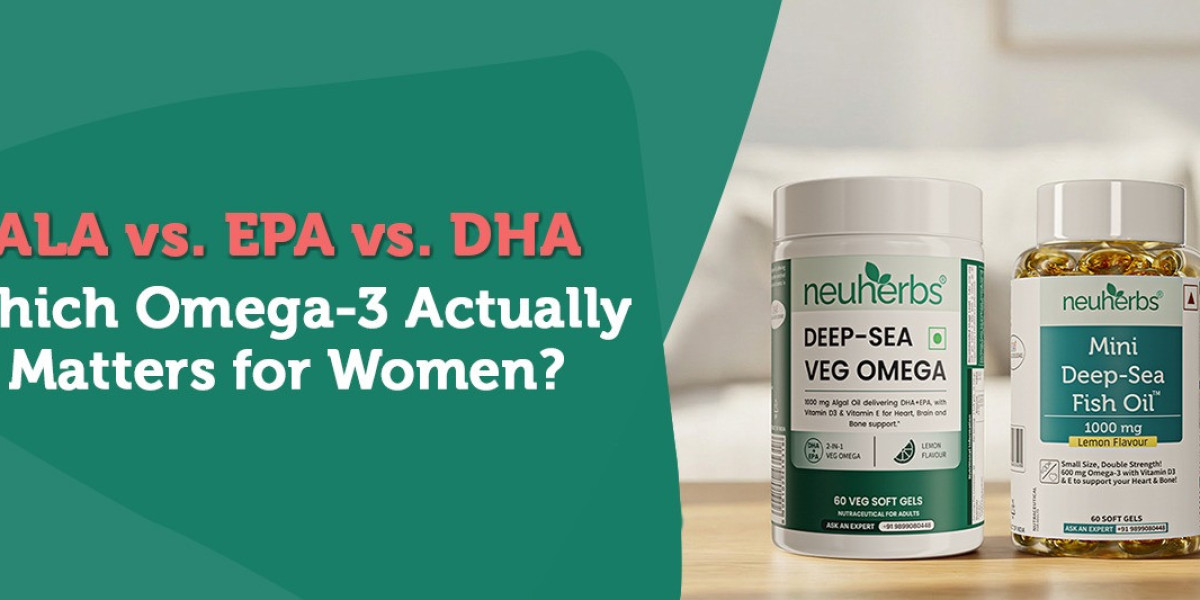

Omega-3 fatty acids are talked about a lot, but not all of them work the same way in your body. Finding the best omega-3 supplement for women starts with understanding the three different types - ALA, EPA, and DHA - where they come from and what they do inside your body. And for women especially, knowing which one you actually need can make a big difference to your health.
The data on this is hard to ignore. A 2025 landmark study published in Progress in Lipid Research, covering omega-3 status data, found that most countries had low to deficient Omega-3 Index (O3I) levels, and alarmingly, 75% of countries don't even have data on omega-3 levels in their populations. India sits squarely in the deficiency category.
Another study of fatty acids profile in 1000 pregnant ladies in Bengaluru and Gurugram (BORN Trial) showed that both vegetarian and non-vegetarian women had much lower omega-3 levels. On average, their total n-3 was only 2.01% for vegetarians and 2.36% for non-vegetarians. This is less than half of what Australian women have (4.75%).
Hormonal health, fertility, pregnancy, bone density, and cardiovascular health risk – all of these are linked to the specific types of omega-3 your body gets, not just how much.
How Your Body Converts Omega-3s (and Why It’s Not Always Easy)?
The three types of essential fatty acids that your body needs are ALA (Alpha-Linolenic Acid), EPA (Eicosapentaenoic Acid), and DHA (Docosahexaenoic Acid).
ALA is the only plant-based omega-3, found in foods like flaxseeds, walnuts, chia seeds, and mustard oil. After you consume ALA, your liver attempts to convert it into EPA, and then further into DHA.
But the fact is, only 0.2% to 9% of the ALA you eat turns into EPA, and even less becomes DHA. Some studies show that women of childbearing age may convert up to 21% of ALA to EPA, which is a bit higher than men, probably because of oestrogen. Still, these numbers are too low to depend on plant sources alone for enough EPA and DHA.
This means that even if you eat flaxseeds every day, your DHA levels might still be very low, especially during times when your body needs it more, like pregnancy or menopause.
For women in India, a country where many people follow vegetarian diets, and seafood is not always eaten every day, this gap in conversion poses a concern.
What Each Omega-3 Actually Does in a Woman’s Body?
Each omega-3 type performs different jobs. Understanding these can help you make better choices for your diet and supplements.
ALA – The Plant-Based Backup
ALA is found in flaxseeds, chia seeds, walnuts, hemp seeds, and mustard oil. It is the dietary precursor to EPA and DHA. On its own, ALA provides anti-inflammatory benefits and cardiovascular support.
However, as established, the body’s ability to convert ALA into the active forms it actually needs is very low. ALA on its own is not enough to maintain healthy DHA levels in the brain, support hormones, or meet the greater omega-3 needs of pregnant women.
ALA is still a useful dietary addition. It does contribute to your total omega-3 intake. But it should not be your primary or only source.
EPA – The Hero Anti-Inflammatory
EPA is found primarily in fatty fish like sardines, mackerel, salmon, and anchovies. It is the most powerful anti-inflammatory omega-3. EPA produces eicosanoids, signally molecules, that help reduce inflammation throughout the body.
For women, EPA is especially important when it comes to managing PMS cramps and mood changes, reducing joint inflammation, supporting heart health, and managing symptoms of PCOS and endometriosis, which affect a large percentage of Indian women.
DHA – The Protector of Cell Membranes
DHA is found in concentrated amounts in the brain, eyes, and cell membranes throughout the body. It makes up a large portion of grey matter in the brain and is directly linked to cognitive function, thinking capabilities, mood, and emotions.
For women specifically, DHA can help:
Develop baby’s brain: DHA accumulates rapidly in a baby’s brain during the third trimester and continues after birth.
Regulate hormones: DHA helps in the healthy production of hormones, including oestrogen and progesterone.
Improve mental health: DHA helps reduce the risks of postpartum depression and anxiety.
Maintain bone density: DHA supports calcium absorption, which is critical for women as they age.
However, both EPA and DHA work best together, not in isolation. This is why quality fish oil omega-3 supplements that provide both are highly recommended.
Taking Omega-3s: Supplements vs. Food
Food should always be your first source of omega-3s. The best sources are:
ALA: Flaxseeds, chia seeds, walnuts, hemp seeds, mustard oil, soybean oil
EPA: Fatty fish, like mackerel, sardines, salmon, anchovies
DHA: Fatty fish (same as above), DHA-fortified eggs and paneer, algae oil (vegan option)
But for many women, especially those who are vegetarian, diet alone may not be sufficient. And that’s when you may have to turn to omega-3 supplements or fish oil capsules.
How to Choose the Best Omega-3 Supplement for Women?
Look for these four things when picking the best omega-3 supplement for women:
Combined EPA + DHA: The supplement should list both EPA and DHA amounts clearly, not just “total fish oil or omega-3”. Fish oil contains several other fats besides omega-3s. So, if your omega-3 supplement isn’t purchased from a good brand, you may get 1000mg of fish oil but only 200 to 300mg of omega-3s.
Purity certification: Look for supplements that are third-party tested for heavy metals like mercury, lead, and arsenic, and other contaminants. Molecular distillation is a great sign. Also, being FSSAI and FDA certified is a bonus sign.
Source transparency: Fish oil sourced from small deep-sea fish like sardines and anchovies tends to be lower in contaminants than large fish like tuna or shark. This is because these fish live far away from the polluted coast and have a shorter lifespan than larger fish.
Bioavailability: Added nutrients like Vitamin D, Boswellia extract, and curcumin increases bioavailability of fish oil. Please make sure one of these is mentioned on the label.
The Cost of Fish Oil Capsules in India
Fish oil tablet price in India varies depending on the brand name and value in the market, omega-3 dosage, and overall product quality. Budget options can start at around INR 299 to INR 399, while higher-strength or premium quality fish oil capsules typically range from INR 699 to INR 2000.
Therefore, try to compare the EPA + DHA content per capsule to understand the true cost of omega-3 supplements. For example, an INR 499 supplement with 500 mg of EPA + DHA per serving is more cost-effective and beneficial than an INR 299 product with only 100 mg.
The cost of fish oil capsules in India also changes based on the purification process and fish source – meaning, molecularly distilled and deep-sea fish oil might be priced a bit higher than regular fish oil supplements.
A Note for Vegetarian and Vegan Women
If you do not eat fish, you can still get EPA and DHA from algae oil supplements. Fish get their omega-3s from marine algae, making them a direct omega-3 source. Deep-sea algal oil supplements provide both EPA and DHA in a plant-based form. These supplements are a great choice for vegetarian and vegan women who want to meet their omega-3 needs without depending on ALA conversion. They have about twice as much DHA as fish oil supplements and do not leave a fishy aftertaste. However, they are lower in EPA.
You can also try flaxseed oil capsules. In addition to omega-3, a 1000mg serving of concentrated, cold-pressed flaxseed oil provides 134mg of omega-6 and 187mg of omega-9.
Final Thoughts
So, which omega-3 actually matters for women? The honest answer is: all three have a role, but EPA and DHA are the ones that do the heavy lifting. ALA from plant sources is a useful dietary addition, but the body’s ability to convert it into the active forms it needs is simply too limited to rely on it alone.
EPA targets inflammation, hormonal balance, and heart health. DHA supports brain function, foetal development, and long-term mental wellbeing. Together, they are what your body actually uses. The goal is to get both consistently, for at least 90 days, to see desired results. This is because omega-3s take time to integrate into cell membranes and start doing what they do.
If you are looking for the best omega-3 supplement in India, we recommend neuherbs. neuherbs offers a wide omega-3 range formulated to suit Indian’s needs, lifestyle, and lipid profile. The brand’s flagship omega-3 supplement, Deep Sea Fish Oil Capsules (2500 mg) with natural lemon flavour, delivers 892 mg of EPA and 594 mg of DHA per serving, sourced from sardines and anchovies, 2X molecularly distilled for purity, and fortified with 100% RDA of Vitamins D3 and E. It is also the only fish oil supplement in India that has been clinically tested on the Indian population.
The brand also offers options for vegetarians (algal oil and flaxseed oil veg omega capsules), athletes (Gold Deep-Sea Fish Oil with higher strength), and beginners (Mini Fish Oil 1000 mg).
That said, every woman’s health needs are different. Before starting a new supplement, it is worth speaking with a healthcare professional to get personalised guidance. You can book a free one-to-one expert consultation to understand your actual needs and receive the right guidance - whether you’re trying to conceive, going through menopause, or simply looking to support your long-term health.