
CAPI Services: A Complete Guide to Digital Field Data Collection
In modern research environments, collecting data quickly is not enough. Organizations need structured, accurate, and decision-ready information gathered through reliable processes. Computer-Assisted Personal Interviewing (CAPI) has emerged as a preferred solution for high-quality field data collection.
This guide explains what CAPI services are, how they work, their advantages, and when they are most suitable.
What Are CAPI Services?
CAPI (Computer-Assisted Personal Interviewing) refers to interviewer-led, face-to-face surveys where responses are entered directly into a digital device such as a tablet, smartphone, or laptop during the interview.
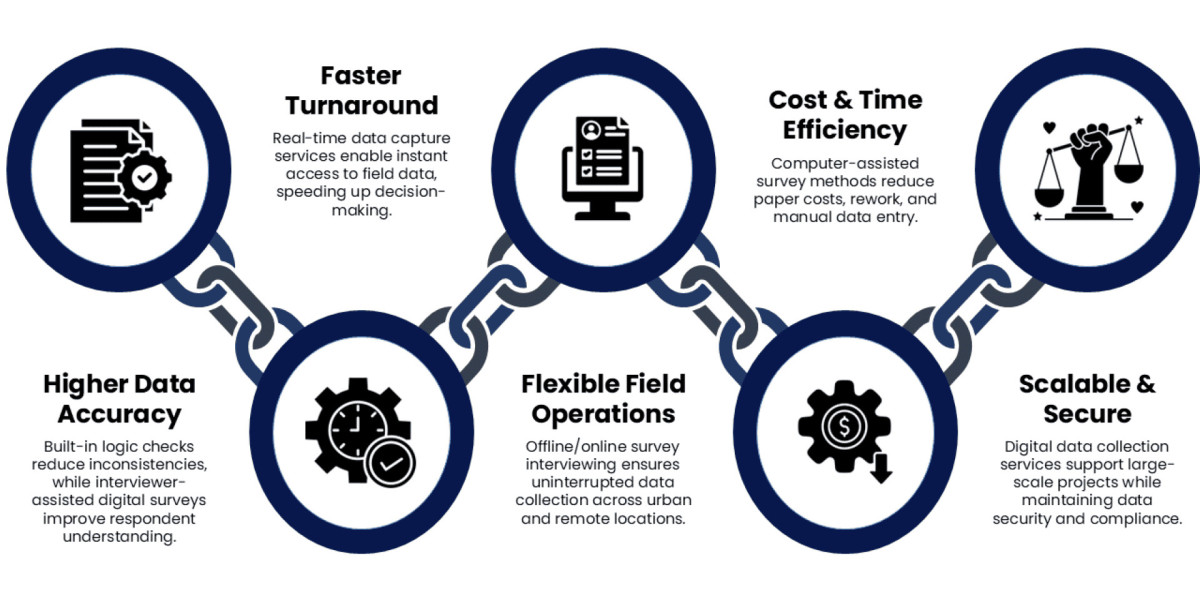
Unlike traditional paper-based surveys, CAPI uses programmed questionnaires that improve accuracy, consistency, and efficiency throughout the research process.
Key Characteristics of CAPI:
Interviewer-administered, face-to-face format
Digital questionnaire programming
Built-in skip logic and validation checks
Real-time or near real-time data monitoring
Offline data capture capability
How CAPI Market Research Services Work
Professional CAPI research typically follows a structured workflow to ensure data quality and operational control.
1. Questionnaire Programming
Before fieldwork begins, the survey is digitally programmed with:
Skip logic and routing rules
Range and consistency validations
Mandatory response fields
Multi-language capabilities
Version control mechanisms
This ensures standardized execution and prevents outdated or incorrect questionnaires from being used in the field.
2. Field Data Collection (Online and Offline)
Trained interviewers conduct in-person surveys using secure digital devices.
One of CAPI’s major strengths is offline functionality. In areas with limited or no internet access, interviews can be completed offline and synced securely once connectivity becomes available. This allows uninterrupted data collection across urban and rural locations.
3. Monitoring and Quality Control
Supervisors and research teams can monitor fieldwork progress through dashboards and tracking systems. Monitoring may include:
Interview completion rates and quota tracking
Interview duration patterns
GPS location capture (where permitted)
Identification of inconsistent or suspicious responses
This structured oversight improves reliability and reduces operational risk.
4. Data Cleaning and Final Delivery
After fieldwork concludes, the dataset undergoes review and validation. Final deliverables typically include:
Clean, structured datasets
Codebooks and documentation
Quality-checked open-ended responses
The result is analysis-ready data suitable for immediate reporting and decision-making.
CAPI vs Other Survey Methods
Understanding how CAPI compares with other methods helps determine when it is most appropriate.
CAPI – Interviewer-led, face-to-face, digital entry
CATI – Interviewer-led telephone surveys
CAWI – Self-administered online surveys
PAPI – Paper-based interviews with manual data entry
CAPI combines the personal interaction of face-to-face research with the structure and control of digital data capture.
What are the main advantages of using CAPI services?