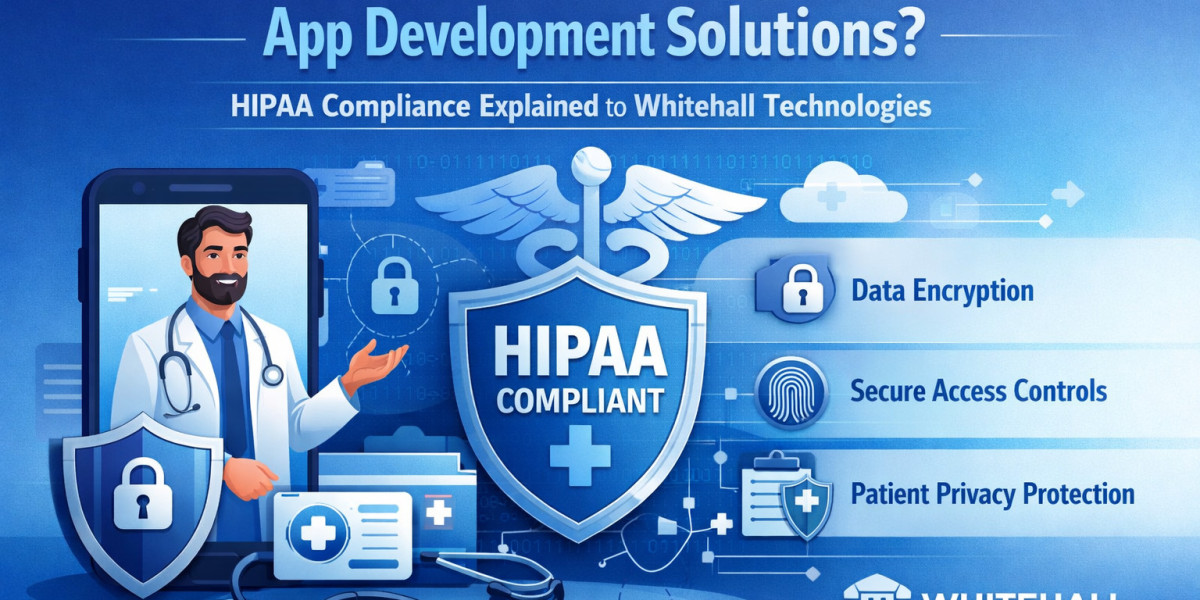

Let’s be honest healthcare and technology are a powerful combo, but they can also be a bit nerve-wracking. When people use doctor on demand app development solutions, they’re not just booking a virtual visit… they’re sharing sensitive medical details that deserve serious protection.
And here’s the kicker: patients expect telemedicine apps to be as easy as ordering coffee, but as secure as a bank vault. That’s a tall order, right?
So, if you’ve ever wondered how secure doctor-on-demand apps really are and what HIPAA compliance actually looks like behind the scenes you’re in the right place. Let’s break it down in plain English, no robotic jargon, no fluff.
Doctor on Demand App Development Solutions and the Security Challenge
Building doctor on demand app development solutions isn’t like creating a food delivery app or a social platform. Nope, not even close.
Healthcare apps deal with:
Patient records
Medical histories
Prescriptions
Video consultations
Insurance details
Basically, the kind of data no one wants floating around the internet.
Security isn’t just a feature here it’s the foundation. Without it, trust collapses faster than a Wi-Fi signal in an elevator.
That’s why telehealth platforms need multiple layers of protection, from login screens to encrypted video calls.
Doctor on Demand App Development Solutions and HIPAA Compliance Basics
When it comes to healthcare apps in the U.S., HIPAA isn’t optional it’s the law of the land.
HIPAA (Health Insurance Portability and Accountability Act) sets strict rules for handling Protected Health Information (PHI). In other words, it tells developers and providers: “Hey, treat patient data like gold.”
To be HIPAA compliant, apps must ensure:
Confidentiality
Only authorized people can access patient information.
Integrity
Data can’t be altered or tampered with improperly.
Availability
Information must be accessible when needed especially in emergencies.
And trust me, compliance isn’t just about checking boxes. It’s about building a system that patients can rely on without second-guessing.
What Makes a Doctor On Demand App Truly Secure?
Alright, so what’s actually happening behind the curtain? Let’s walk through the key security elements that make telemedicine apps safe.
1. End-to-End Encryption
Encryption is like turning sensitive data into an unreadable code. Even if someone intercepts it, they can’t make sense of it.
Secure apps encrypt:
Video consultations
Chat messages
Stored medical data
Payment details
Without encryption, it’s basically leaving the front door wide open.
2. Strong User Authentication
Passwords alone? Yeah… not enough anymore.
Most secure telehealth apps use:
Multi-factor authentication (MFA)
Biometric login (Face ID, fingerprint)
Session timeouts
Role-based access
This keeps random intruders out and ensures only the right people see the right data.
3. Secure Cloud Storage
Telemedicine apps often rely on cloud infrastructure, but not all clouds are created equal.
HIPAA-compliant platforms require:
Encrypted storage
Regular backups
Audit logs
Strict access controls
A secure cloud environment is a must, not a “nice-to-have.”
4. Audit Trails and Activity Monitoring
HIPAA expects transparency. That means apps should track who accessed what, when, and why.
Audit logs help detect:
Unauthorized access
Suspicious activity
Data breaches
It’s like having security cameras in a digital hallway.
The Role of HIPAA Compliant App Development in 2026
Now, here’s where things get even more interesting.
HIPAA Compliant App Development in 2026 isn’t just about following old rules it’s about adapting to new threats, smarter hackers, and evolving technology.
In 2026, compliance is expected to focus more heavily on:
AI-driven monitoring
Advanced cybersecurity frameworks
Stronger patient consent controls
Real-time breach detection
Privacy-by-design development
Healthcare is going digital fast, and security standards are sprinting to keep up.
So if you’re building a telemedicine platform today, you’ve gotta think ahead not just about compliance now, but compliance tomorrow.
Common Security Mistakes Telehealth Apps Must Avoid
Even the best ideas can flop if security is treated like an afterthought.
Here are some classic mistakes:
Storing patient data without encryption
Using weak login systems
Ignoring HIPAA audit requirements
Failing to sign Business Associate Agreements (BAAs)
Not updating software regularly
One small crack in the system can lead to massive legal trouble and even worse, lost patient trust.
Key Features That Support HIPAA Compliance
A secure doctor-on-demand app should include features that protect both patients and providers.
Here’s a handy checklist:
Essential Compliance Features
Secure video consultation
Encrypted messaging
Role-based user permissions
Automatic logouts
Consent management tools
Secure prescription handling
Emergency access protocols
The goal is simple: privacy without sacrificing usability.
Why Patients Care More Than Ever
Patients today are surprisingly tech-savvy. They might not know the ins and outs of HIPAA, but they do know when something feels sketchy.
If an app feels unsafe, they’ll bounceno second chances.
Trust is the currency of telehealth. Security is how you earn it.
Conclusion
So, how secure are doctor-on-demand apps? Well, the answer depends on how seriously security and compliance are taken from day one.
Strong encryption, authentication, audit trails, and forward-looking planning are what separate trustworthy platforms from risky ones.
And with the rise of HIPAA Compliant App Development in 2026, the future of telemedicine will demand even smarter safeguards.