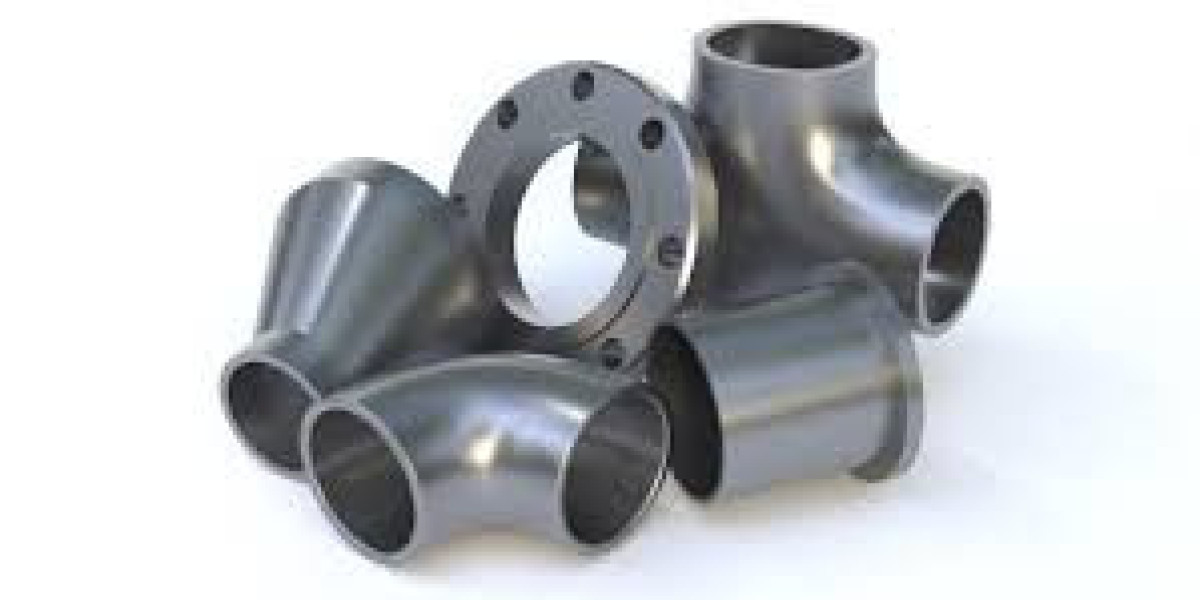

Titanium pipe fittings are widely used in industries where high strength, corrosion resistance, and weight reduction are critical requirements. Known for their exceptional performance in aggressive environments, titanium fittings offer a long service life even under extreme temperature and pressure conditions. Their reliability and low maintenance needs make them a preferred solution for demanding piping systems.
Material Properties and Composition
Titanium pipe fittings are manufactured from commercially pure titanium grades and titanium alloys, most commonly Grade 2 and Grade 5. These materials provide an excellent combination of strength, ductility, and corrosion resistance. Titanium naturally forms a stable oxide layer on its surface, which protects it from corrosion in seawater, chlorides, acids, and industrial chemicals.
Despite being lightweight, titanium offers mechanical strength comparable to many steel grades. This high strength-to-weight ratio makes titanium fittings especially suitable for applications where structural efficiency and reduced system load are important.
Manufacturing Process of Titanium Pipe Fittings
The manufacturing of titanium pipe fittings begins with high-quality titanium billets or pipes produced through controlled melting and refining processes. These raw materials are then shaped into elbows, tees, reducers, and other fittings using hot forming or precision forging techniques.
To ensure dimensional accuracy and mechanical integrity, fittings undergo heat treatment and non-destructive testing. Surface finishing processes such as pickling or polishing may also be applied depending on the application and cleanliness requirements of the piping system.
Types of Titanium Pipe Fittings
Titanium pipe fittings are available in a wide range of configurations to meet different piping layouts. Common types include elbows for directional changes, tees for flow distribution, reducers for size transitions, and caps for pipe termination. These fittings are produced in seamless and welded forms, with options for butt-weld, socket-weld, and threaded connections.
The availability of multiple grades and pressure ratings allows engineers to select fittings tailored to specific operating conditions.
Industrial Applications
Titanium pipe fittings are extensively used in chemical processing plants, where resistance to corrosive chemicals is essential. In marine and offshore industries, they perform exceptionally well in seawater environments, making them ideal for cooling systems and desalination plants.
Aerospace, power generation, and oil & gas industries also rely on titanium pipe fittings for high-performance piping systems. Additionally, they are increasingly used in medical, pharmaceutical, and food processing applications due to their cleanliness and biocompatibility.
Advantages of Titanium Pipe Fittings
One of the key advantages of titanium pipe fittings is their outstanding corrosion resistance, which significantly reduces maintenance and replacement costs. Their lightweight nature simplifies installation and lowers overall system weight, especially in large-scale piping networks.
Titanium fittings also maintain their mechanical properties over a wide temperature range and offer excellent fatigue resistance. Combined with long-term durability and recyclability, these benefits make titanium an economical choice over the lifecycle of the system.
Conclusion
Titanium pipe fittings provide a high-performance solution for piping systems operating in harsh and demanding environments. With their unique combination of strength, corrosion resistance, and lightweight properties, they deliver reliable performance where conventional materials may fail. Selecting the appropriate grade and fitting type ensures optimal efficiency, safety, and longevity of the piping system.