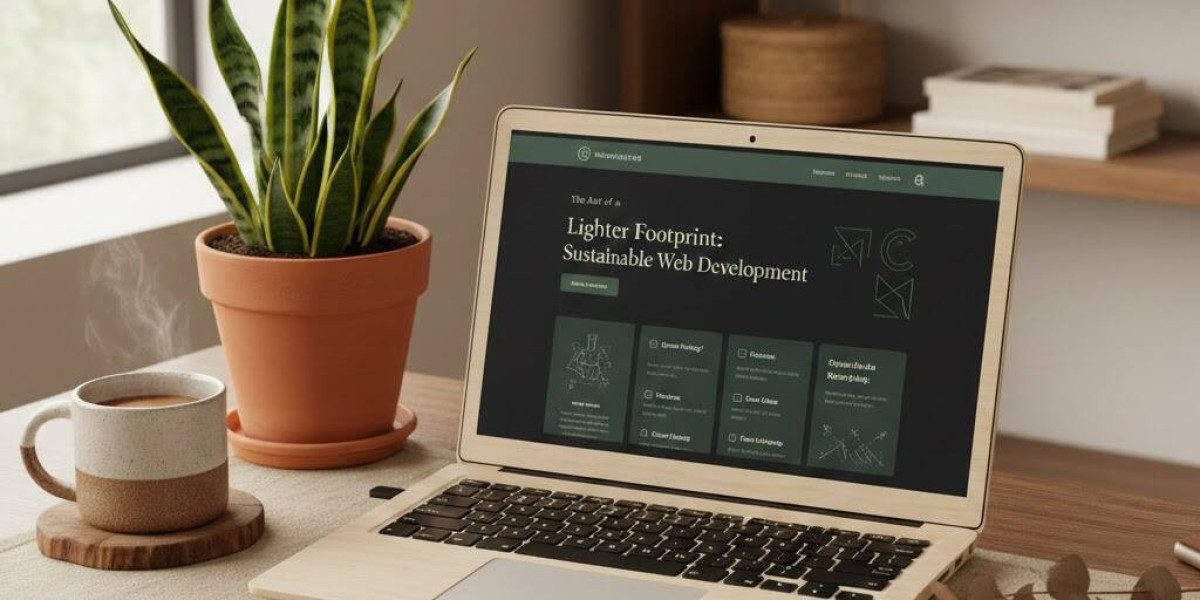

The Art of a Lighter Footprint: A Thoughtful Guide to Sustainable Web Development
We all know that wonderful feeling of walking into a room that just "breathes"—where the clutter is cleared, the light is soft, and everything has its place. It’s a sense of calm we strive for in our physical homes, yet many of us feel a strange, invisible heaviness when we spend time online. You’ve likely noticed it yourself: the way a busy, sluggish website can feel just as draining as a messy kitchen counter on a Monday morning.
The good news is that creating a digital space doesn’t have to come at the cost of the planet or your peace of mind. By applying the same principles of intentionality and curation that we use in interior design, you can build a "digital home" that is light, fast, and remarkably kind to the environment. In this guide, we’re going to explore the art of sustainable web development. We’ll look at how to choose a "green" foundation for your site, the secrets to digital de-cluttering through image optimization, and why simple, clean code is the ultimate form of digital elegance.
The Digital Sanctuary
I often think of a website as a digital sanctuary—a place where your ideas live and where your guests come to visit. But just like a physical room, a digital space can become "stuffy." When a website is filled with heavy files, redundant scripts, and unnecessary features, it requires more energy to host and more power to load.
By embracing sustainable web development, we are simply practicing digital housekeeping. We are choosing to be lighter on the earth by making our websites more efficient. Every megabyte of data transferred contributes to the global carbon footprint of the internet. It’s a beautiful way to ensure that your online presence reflects the same mindful values you hold in your daily life.
Choosing the Foundation (Eco-Friendly Hosting)
If you were building a cottage, you’d care deeply about the land it sits on. In the digital world, that "land" is your hosting provider. Most websites live on servers in massive data centers that run 24/7, requiring immense amounts of electricity for power and water for cooling.
The most impactful change you can make is moving your site to a host that uses 100% renewable energy. Many green hosts now use wind or solar power to run their servers, and some even invest in carbon offsetting by planting trees for every new sign-up. It’s a quiet, behind-the-scenes choice that sets an honest, eco-friendly foundation for everything else you build.
Curating with Purpose (Optimizing Media)
In a small apartment, every piece of furniture has to earn its keep. You wouldn't put a massive, heavy armoire in a tiny breakfast nook—it would overwhelm the space. The same is true for your images. High-resolution photos are the "furniture" of your website, and if they are too heavy, they slow everything down.
The Art of the Resize: Before you upload that beautiful lifestyle shot, make sure it’s resized to the exact dimensions it needs to be.
Modern Textures: Use modern file formats like WebP or AVIF. They provide the same crisp detail as a traditional JPEG but at a fraction of the digital weight.
Mindful Motion: We all love the movement of a video, but it’s the most "expensive" asset in terms of energy. Consider using a still, high-quality image instead, or ensure videos only play when a visitor genuinely wants to see them.
Clean Lines and Minimalist Code
There is something so refreshing about clean lines in architecture, and the same applies to the code behind your screen. A sustainable website is built with "lean" code. This means avoiding the digital equivalent of "junk drawers"—those bulky plugins or pre-made themes that come with thousands of lines of code you’ll never actually use.
When a developer writes clean, bespoke code, the browser doesn't have to work as hard to "read" the page. This saves processing power on the user’s device, which in turn saves battery life. It’s the ultimate form of invisible elegance.
Designing for the Atmosphere (User Experience & Dark Mode)
Sustainability and comfort often go hand-in-hand. Consider the "atmosphere" of your site. Using a "Dark Mode" option is a lovely way to save energy on devices with OLED screens, where black pixels essentially turn off.
Beyond energy, sustainability is also about inclusivity. An accessible website—one that is easy for everyone to read and navigate—is naturally more efficient. When we design for everyone, we remove the "friction" that causes a site to lag or consume extra data. It’s about making sure your digital doors are wide open, using as little energy as possible to keep the lights on.
Longevity Over Trends
We’ve all seen "fast fashion" interiors that look dated within a year. Digital trends move even faster. However, the most sustainable website is the one that doesn't need to be rebuilt every season.
By choosing a timeless, classic aesthetic and focusing on high-quality functionality, you reduce the need for constant "renovations." This reduces digital waste and ensures your brand remains a steady, reliable presence in a fast-moving world. It’s about building something that ages gracefully, rather than something that needs to be replaced.
A Reflection on Digital Living
At its heart, sustainable web development is an invitation to be more present and more intentional. It’s a reminder that even in the virtual world, our choices have real-world ripples. When we choose to build smaller, faster, and cleaner, we aren't just making a website; we’re contributing to a healthier, more beautiful internet.
Just as we curate our homes to be a reflection of our best selves, we can curate our digital spaces to be a reflection of the world we want to live in—one that is mindful, elegant, and light on the earth.
Conclusion
At its heart, sustainable web development is an invitation to be more present and more intentional with the space we occupy online. It’s a gentle reminder that even in the virtual world, our choices have real-world ripples. When we choose to build smaller, faster, and cleaner, we aren't just making a website; we’re contributing to a healthier, more beautiful internet for everyone.
Just as we curate our homes to be a reflection of our best selves—filling them with things that are useful, beautiful, and kind to the environment—we can curate our digital spaces to do the same. Building a sustainable site is a journey of refinement rather than sacrifice. It’s about creating a landscape that is mindful, elegant, and light on the earth, ensuring that our digital legacy is as thoughtful as the homes we live in.