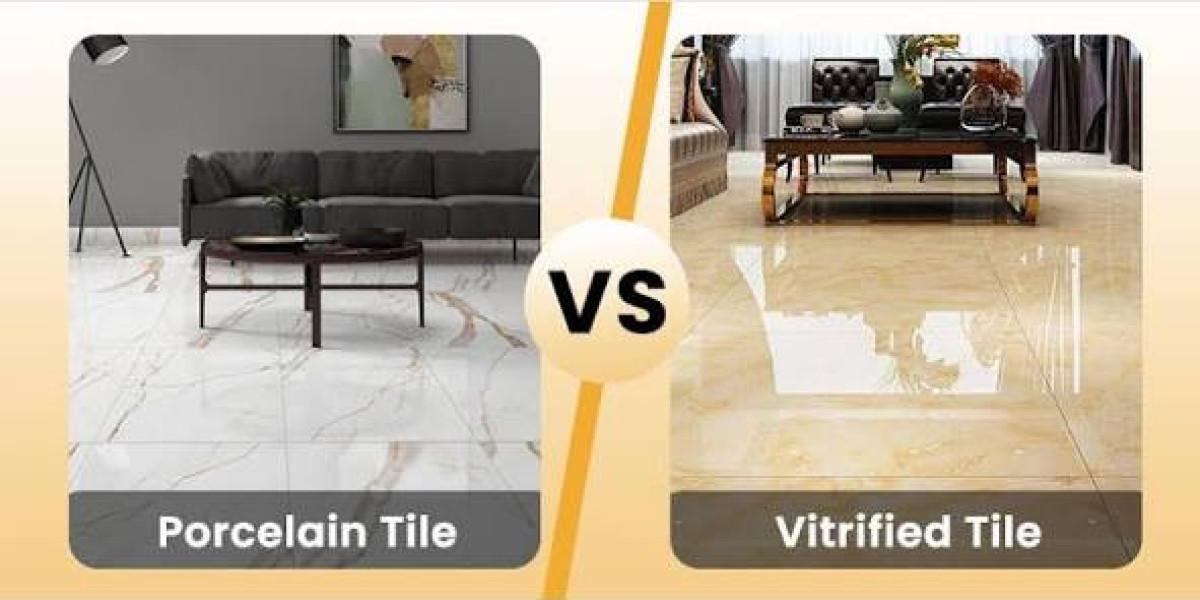

Introduction
Choosing the right tiles is one of the most important decisions when designing or renovating a home or commercial space. Tiles not only define the visual appeal of a room but also affect durability, maintenance, and long-term performance. Among the many options available today, vitrified tiles and porcelain tiles are two of the most popular choices.
However, many homeowners and builders often get confused when comparing Vitrified Tiles vs Porcelain Tiles. Both look similar, offer excellent strength, and are widely used across residential and commercial projects. But they are not the same.
In this detailed guide, we will break down the key differences, advantages, disadvantages, and ideal use cases of vitrified and porcelain tiles—helping you make a confident and informed decision.
What Are Vitrified Tiles?
Vitrified tiles are manufactured using a mixture of clay, silica, quartz, and feldspar. These materials are heated at extremely high temperatures, resulting in a tile with very low porosity and high strength.
The vitrification process gives these tiles a glass-like finish, making them highly durable and resistant to stains and moisture.
Key Features of Vitrified Tiles
Extremely low water absorption
High durability and strength
Available in glossy, matte, and textured finishes
Wide range of colors and designs
Easy to maintain
Vitrified tiles are commonly used in living rooms, bedrooms, offices, malls, and commercial buildings.
What Are Porcelain Tiles?
Porcelain tiles are a type of ceramic tile made from refined clay and fired at very high temperatures. This process makes them denser and harder than standard ceramic tiles.
Porcelain tiles are known for their natural stone-like appearance and exceptional durability, making them suitable for both indoor and outdoor applications.
Key Features of Porcelain Tiles
Dense and hard structure
Low water absorption
Excellent resistance to wear and tear
Suitable for high-traffic areas
Available in stone, wood, and concrete finishes
They are often used in bathrooms, kitchens, balconies, outdoor patios, and commercial spaces.
Vitrified Tiles vs Porcelain Tiles: Key Differences
Let’s compare vitrified and porcelain tiles across important parameters to understand how they differ.
1. Raw Materials and Manufacturing
Vitrified tiles use a blend of clay and silica-based materials, while porcelain tiles are made from finer, more refined clay.
Vitrified Tiles: Glass-like finish due to vitrification
Porcelain Tiles: Compact and dense due to refined clay
Both are fired at high temperatures, but porcelain tiles typically undergo a slightly more intense firing process.
2. Water Absorption
Water absorption plays a major role in tile durability.
Vitrified Tiles: Water absorption rate is less than 0.5%
Porcelain Tiles: Also less than 0.5%, but slightly higher than vitrified tiles in some cases
Both tiles are excellent for moisture-prone areas, but vitrified tiles perform marginally better in indoor settings.
3. Strength and Durability
When it comes to strength, both tiles are top performers.
Vitrified Tiles: Highly resistant to scratches and stains
Porcelain Tiles: Extremely hard and resistant to heavy foot traffic
Porcelain tiles are often preferred in commercial and outdoor spaces due to their superior toughness.
4. Appearance and Design Options
This is where vitrified tiles often take the lead.
Vitrified Tiles: Available in high-gloss, double-charged, full-body, and digital designs
Porcelain Tiles: Typically have a matte or natural stone finish
If you are looking for modern, glossy interiors, vitrified tiles offer more design flexibility.
5. Maintenance and Cleaning
Both tiles are easy to maintain, but vitrified tiles require slightly less effort.
Vitrified Tiles: Non-porous surface resists stains and spills
Porcelain Tiles: Easy to clean but may need sealing in some textured finishes
For homes with children or pets, vitrified tiles are often more convenient.
6. Installation and Cutting
Porcelain tiles are harder and denser, making installation slightly more complex.
Vitrified Tiles: Easier to cut and install
Porcelain Tiles: Requires professional tools and skilled labor
This can also impact overall installation costs.
7. Cost Comparison
Cost is an important factor for most buyers.
Vitrified Tiles: Generally more affordable
Porcelain Tiles: Slightly more expensive due to material density and manufacturing
However, prices may vary depending on brand, design, and finish.
Ideal Applications: Which Tile Should You Choose?
Choose Vitrified Tiles If:
You want stylish and glossy interiors
The area is mostly indoor (living room, bedroom, office)
You want easy maintenance
You are working within a budget
Choose Porcelain Tiles If:
The area has heavy foot traffic
You need tiles for outdoor or wet areas
You prefer natural stone or wood finishes
Durability is your top priority
Environmental Impact
Both vitrified and porcelain tiles are considered eco-friendly as they are made from natural materials and have a long lifespan. Their durability reduces the need for frequent replacements, making them a sustainable flooring choice.
Common Myths About Vitrified and Porcelain Tiles
Myth 1: They Are the Same
While they look similar, their composition and performance differ.
Myth 2: Glossy Tiles Are Slippery
Modern vitrified tiles come with anti-skid finishes suitable for safe use.
Myth 3: Porcelain Tiles Are Only for Outdoors
Porcelain tiles work equally well indoors, especially in kitchens and bathrooms.
Expert Tip for Buyers
Before purchasing, always check:
PEI rating (wear resistance)
Slip resistance
Thickness and size
Manufacturer warranty
Consulting a trusted tile supplier ensures you get the right product for your needs.
Conclusion
When it comes to choosing between vitrified and porcelain tiles, there is no one-size-fits-all answer. The decision depends on your space, budget, and design preferences.
Understanding the real differences between Vitrified Tiles vs Porcelain Tiles helps you make a smart investment that enhances both aesthetics and functionality. Vitrified tiles are perfect for modern interiors with minimal maintenance, while porcelain tiles shine in high-traffic and outdoor environments.
By selecting the right tile for the right area, you ensure long-lasting beauty, comfort, and value for your space.