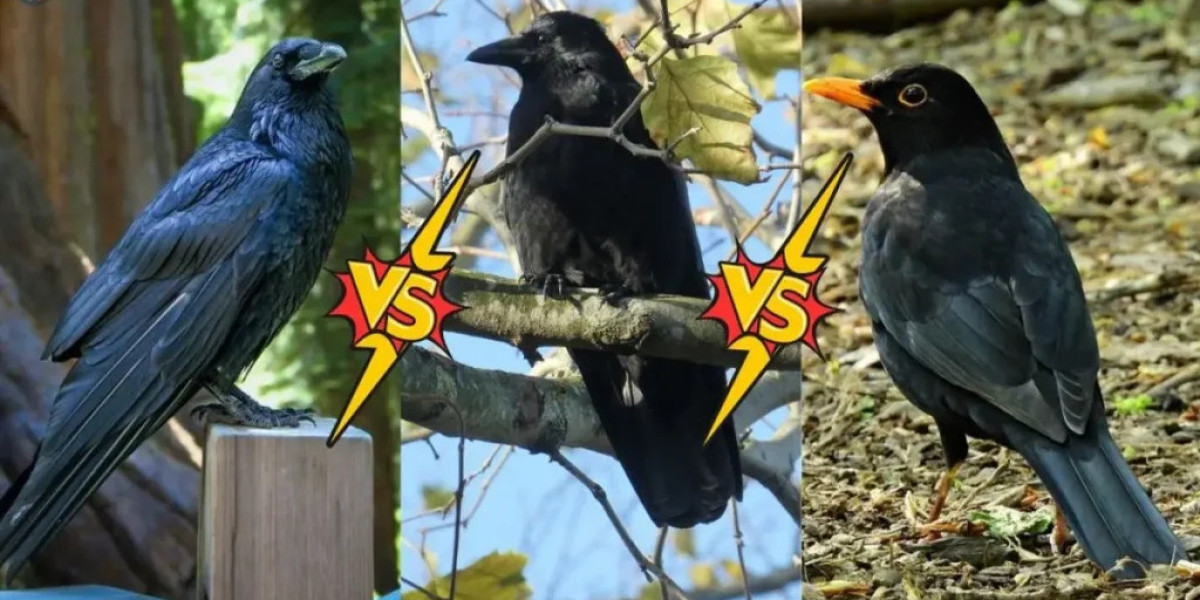

Introduction: The Mystery of Black Birds
If you’ve ever looked up at a black bird flying across the sky and wondered, Is that a raven, a crow, or something else?, you’re not alone. Even experienced birdwatchers can get tripped up by these clever, jet-black creatures.
I remember the first time I tried to identify a Chihuahuan raven during a weekend nature hike. Its sleek feathers and confident flight left me staring in awe and confusion. That’s the magic of the crow family: intelligent, adaptive, and fascinating. Understanding the difference between raven and crow, and spotting blackbirds in the wild, can turn any casual birdwatching outing into an engaging learning experience.
Let’s walk through step-by-step tips to help you confidently spot ravens, crows, and blackbirds from tail shape to calls and beyond.
1. Size Matters: Look at the Overall Silhouette
One of the first clues to tell raven and crow apart is size. Ravens are generally larger, with a wingspan that can impress even the casual observer. Crows are smaller and more uniform in shape, while many black bird crow species, like the Fish Crow, fall somewhere in between.
When you’re in the field, compare the bird to nearby objects a tree branch, a fence, or even other birds. This visual context helps you make an educated guess before listening for their signature sounds.
2. Tail Shapes Tell a Story
A subtle but powerful identification trick is observing the crow tail. Ravens typically have wedge-shaped tails, perfect for soaring and acrobatics. Crows, on the other hand, show a fan-shaped tail when flying. Observing this can make a huge difference, especially if you’re trying to differentiate a crow raven pair in flight.
If you’re watching a Fish Crow, note that its tail is shorter and slightly squared, making subtle observations critical. With practice, these tail distinctions become second nature like recognizing the structure of a complex codebase in IT.
3. Listen Closely: Calls and Vocalizations
The crow calls are iconic: loud, cawing sounds that signal presence and alertness. Ravens, however, have deeper, croaking calls, sometimes accompanied by gurgling or clicking noises. Spending time listening to these vocal differences trains your ear much like debugging a program by listening for subtle system cues.
Pro tip: Early mornings are often the best time to hear distinctive calls. Many blackbirds, including Chihuahuan ravens, are more vocal at dawn.
4. Observe Behavior and Flight Patterns
Behavior offers another key clue. Ravens often fly alone or in pairs, showing playful aerial maneuvers, while crows are more social, frequently spotted in groups. Black bird crow species may forage in flocks, hopping along the ground or darting between branches.
Watching flight patterns over time can reveal intelligence and adaptability traits that make raven and crow interactions fascinating to observe. Think of it as analyzing user behavior patterns in software development: subtle movements tell a story.
5. Consider Habitat and Range
Different species prefer different habitats. Fish crows thrive along coastal areas, while Chihuahuan ravens favor arid regions. Understanding your local birding environment increases your chances of accurate identification. Pairing habitat knowledge with visual cues and sound recognition creates a full picture.
Conclusion: Becoming a Keen Observer
Spotting ravens, crows, and blackbirds takes patience, attention to detail, and a little curiosity. By noting size, tail shape, calls, behavior, and habitat, you’ll start to see the subtle differences between these fascinating birds.
Next time you’re outdoors, take a notebook or your phone to jot observations, compare them, and slowly build your own mental field guide. With each outing, spotting a crow raven, Chihuahuan raven, or black bird crow will become easier and much more rewarding.
Happy birdwatching, and may your eyes and ears grow sharper with every flight you observe.