
Introduction: Turning Playtime into a Creativity Lab
Have you ever watched a preschooler turn a simple block into a spaceship or a castle? That’s the magic of educational toys at work. They’re not just colorful distractions they’re tools that spark imagination, problem-solving, and early learning skills. As a preschool teacher or a parent guiding play at home, you have a unique opportunity to transform playtime into a mini creativity lab.
Educational toys provide a hands-on way to engage children in preschool learning while letting them explore, experiment, and invent. When combined with thoughtful teaching strategies, these toys can lay a strong foundation for critical thinking and imaginative problem-solving, even in young children.
1. Choose the Right Educational Toys for the Age
Not all toys are created equal. A puzzle that challenges a five-year-old may overwhelm a three-year-old, while stacking blocks can be perfect for both. Start by evaluating toys for age-appropriateness and learning value.
Look for brainy toys that encourage open-ended play think building sets, creative art kits, or interactive storytelling toys. These tools give children the freedom to explore their ideas rather than following rigid instructions. Even simple objects like shape sorters or magnetic tiles can be transformed into endless creative activities when paired with your guidance.
2. Create an Inspiring Classroom Environment or Play Area
A cluttered space can stifle creativity, while a thoughtfully designed play area can ignite it. In a classroom environment or home setting, designate spaces that invite exploration:
- Bright, accessible shelves for educational toys
- A table for arts and crafts or building activities
- Soft mats or rugs for floor-based play
Allow children to move freely between areas, combining different toys and materials. When the environment encourages curiosity, even routine educational activities for preschoolers become opportunities for discovery and innovation.
3. Blend Play with Guided Learning Activities
Toys are most effective when paired with intentional guidance. Combine play with simple prompts or preschool activities worksheets that nudge children toward creative problem-solving:
- Ask open-ended questions: “What else could this block be?”
- Introduce challenges: “Can you build a bridge that holds three toy cars?”
- Encourage storytelling: “Who lives in your cardboard castle?”
By blending structured preschool classes techniques with imaginative play, children start to see possibilities beyond what’s immediately in front of them.
4. Encourage Collaboration and Social Creativity
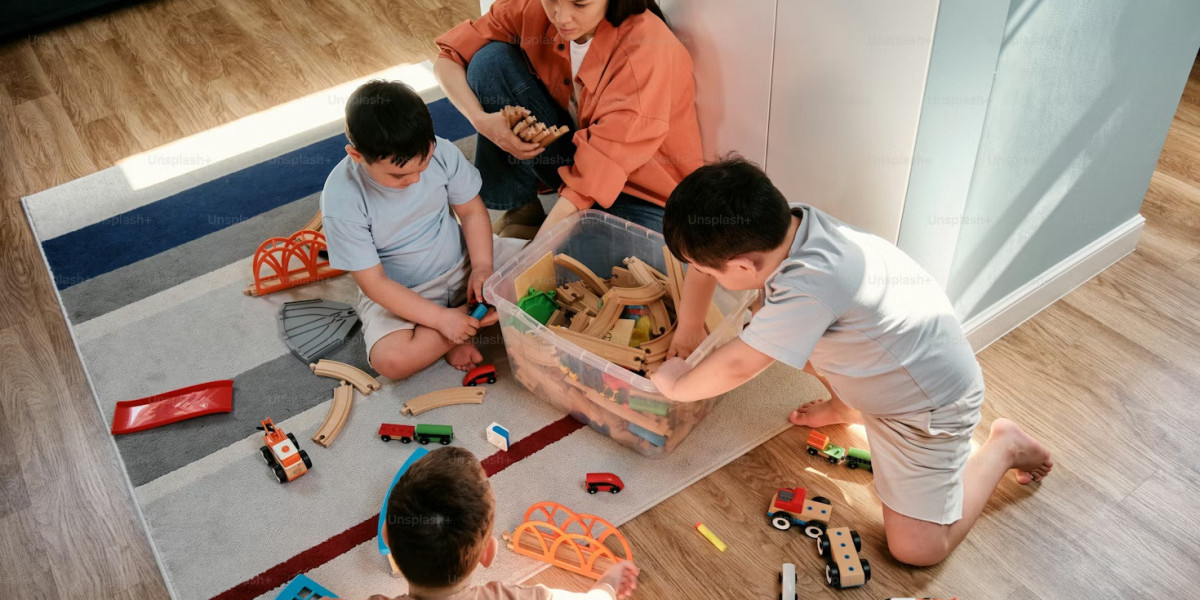
Creativity thrives in collaboration. Group play using educational toys lets children share ideas, negotiate solutions, and learn from each other. For example, a set of building blocks becomes a shared project, where one child adds walls while another designs a tower.
In your teaching strategies, include team-based activities to foster social skills alongside creativity. This mirrors real-world problem-solving, teaching children how to brainstorm, compromise, and innovate together.
5. Observe, Reflect, and Extend Learning
Finally, don’t just let play happen observe it. Take note of what excites a child, which toys spark the most ideas, and which activities generate frustration. This reflection can guide your next steps in play and learn preschool sessions.
Extend learning by connecting play experiences to new concepts. A child stacking blocks may be introduced to simple math terms like “balance” and “height,” or a storytelling activity could evolve into writing or drawing exercises. Small, intentional extensions transform fun into meaningful educational experiences.
Conclusion: Empowering Creativity Through Play
Educational toys are more than just fun they’re gateways to creativity, exploration, and early cognitive growth. By carefully selecting toys, designing inspiring play areas, guiding structured and unstructured activities, and encouraging collaboration, you can help preschoolers develop skills that last a lifetime.
Start small, observe often, and celebrate every inventive idea a child brings to life. With these strategies, playtime becomes a launchpad for curiosity, imagination, and lifelong learning.=