
Pressure washing can feel satisfying. Dirt disappears. Surfaces brighten. A home looks refreshed in hours. But while the driveway and siding benefit, nearby landscaping often takes the hit if care is not taken. Plants, flowers, and soil do not respond well to high pressure water or harsh cleaners. Just like planning around commercial plumbing services Woodheaven before major exterior work prevents costly mistakes, protecting your landscaping should be part of every pressure washing plan.
I once watched a neighbor wash their patio without covering the garden bed beside it. The next morning, leaves were yellow and stems bent. The water did its job, but the plants paid the price. That moment made one thing clear. Preparation matters.
Why pressure washing can harm plants
Plants thrive on gentle water and stable soil. Pressure washers deliver force designed to strip grime from concrete and brick. That same force can damage delicate leaves, break stems, and erode soil around roots.
Cleaning solutions add another risk. Many detergents contain chemicals that dry out leaves or alter soil balance. Even products labeled safe can cause stress if not diluted or rinsed properly.
Understanding these risks helps prevent lasting damage.
Plan before you turn on the washer
Protection starts before water flows. Walk the area and take note of plant locations. Identify flower beds, shrubs, young trees, and lawn edges close to surfaces you plan to clean.
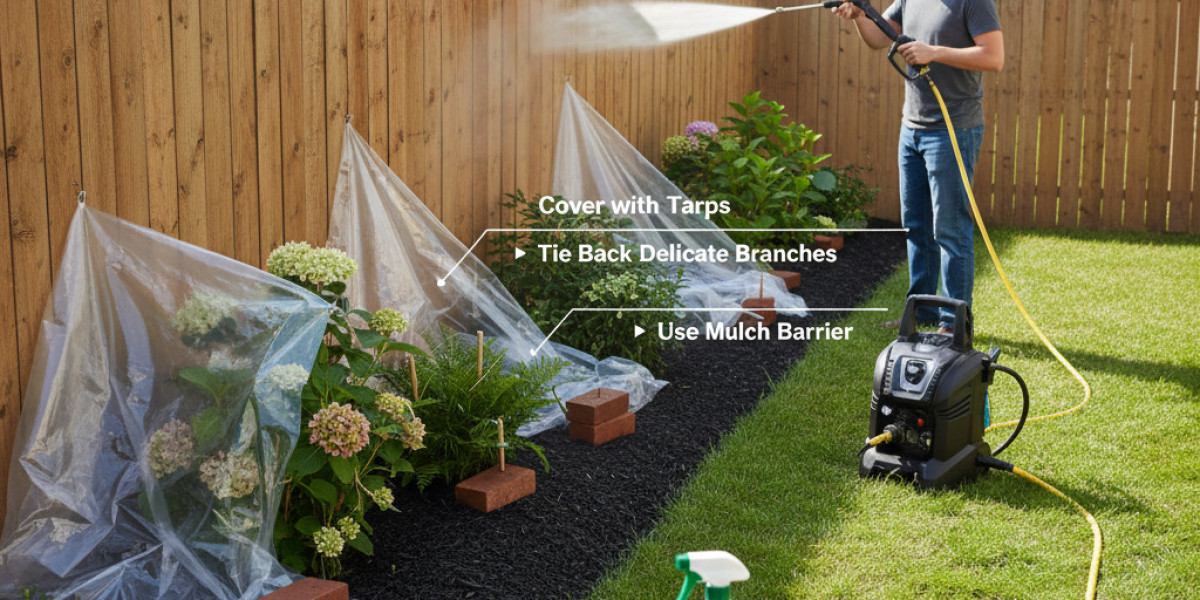
Move potted plants away from the work zone if possible. For planted beds, create physical barriers. Old sheets, drop cloths, or breathable tarps work well. Avoid plastic if temperatures are high, as heat buildup can harm plants.
Secure covers loosely. Plants still need airflow and light.
Water plants before and after cleaning
Dry plants absorb chemicals faster than hydrated ones. Lightly water all nearby plants before pressure washing. Moist leaves and soil act as a buffer.
After cleaning, rinse plants again with a garden hose. This washes away residue and reduces chemical contact time.
Think of it as pre and post care, much like conditioning before and after physical work.
Choose the right cleaning solutions
Many homeowners reach for strong cleaners to speed up results. This often causes plant damage. Choose products designed for exterior use that are labeled plant friendly.
Dilute cleaners more than the minimum recommendation when working near landscaping. Use only what you need. Avoid letting solutions dwell on surfaces longer than instructed.
If unsure, test a small area away from plants first.
Adjust pressure and spray angle
Not every surface needs maximum pressure. Lower pressure reduces splash and runoff. Use wider spray tips instead of narrow jets.
Keep the nozzle angled away from plants. Direct water toward the surface being cleaned, not outward. Maintain distance. The closer the nozzle, the stronger the force.
Control equals protection.
Manage runoff and drainage
Water mixed with dirt and cleaner flows somewhere. Make sure it does not pool in garden beds or flow directly over roots.
Use temporary barriers like sandbags or rolled towels to redirect runoff. Clear drains so water moves away from landscaping.
Good drainage protects both plants and structures.
Cover soil and mulch carefully
Exposed soil erodes easily under pressure washing runoff. Mulch can shift and uncover roots.
Cover garden beds with breathable fabric. This holds soil in place while allowing air and water exchange. Remove covers as soon as washing ends.
Reset mulch afterward to maintain moisture and appearance.
Watch weather and timing
Hot sunny days increase plant stress. If possible, pressure wash during cooler parts of the day. Early morning or late afternoon works best.
Avoid washing during drought conditions when plants are already stressed. Postpone if heavy rain is expected, as saturated soil erodes faster.
Timing supports plant recovery.
Inspect plants after washing
Once everything dries, walk the area again. Look for broken stems, flattened foliage, or discoloration. Minor damage often recovers with proper care.
Trim broken parts cleanly. Water deeply the next day. Monitor plants for a week.
Early attention prevents small issues from becoming permanent.
Pressure washing as part of exterior care
Exterior maintenance often happens in stages. Pressure washing may come before repairs, painting, or upgrades. Each step affects the landscape.
When homeowners plan projects like Affordable Painting Services in Woodhaven, protecting plants keeps the entire property looking balanced and healthy.
Landscaping frames your home. Preserving it during cleaning maintains curb appeal and avoids costly replacements.
Final thoughts on plant safe pressure washing
Pressure washing and landscaping do not have to conflict. With planning, gentle techniques, and awareness, both can thrive. Clean surfaces and healthy plants can exist together.
The goal is balance. Respect the power of water. Protect what grows quietly beside your home.
Frequently Asked Questions
Can pressure washing kill plants
Yes. High pressure and chemicals can damage or kill plants if not protected.
Are eco friendly cleaners safe for landscaping
They are safer but still require dilution and rinsing to prevent stress.
Should I cover grass near driveways
Yes. Covering or wetting grass helps reduce damage from runoff.
How long should plants be covered during washing
Only during active washing. Remove covers promptly afterward.
What if plants show damage days later
Prune affected areas, water deeply, and monitor recovery.
Pressure washing refreshes your home. With the right care, your landscaping can stay just as healthy and vibrant.