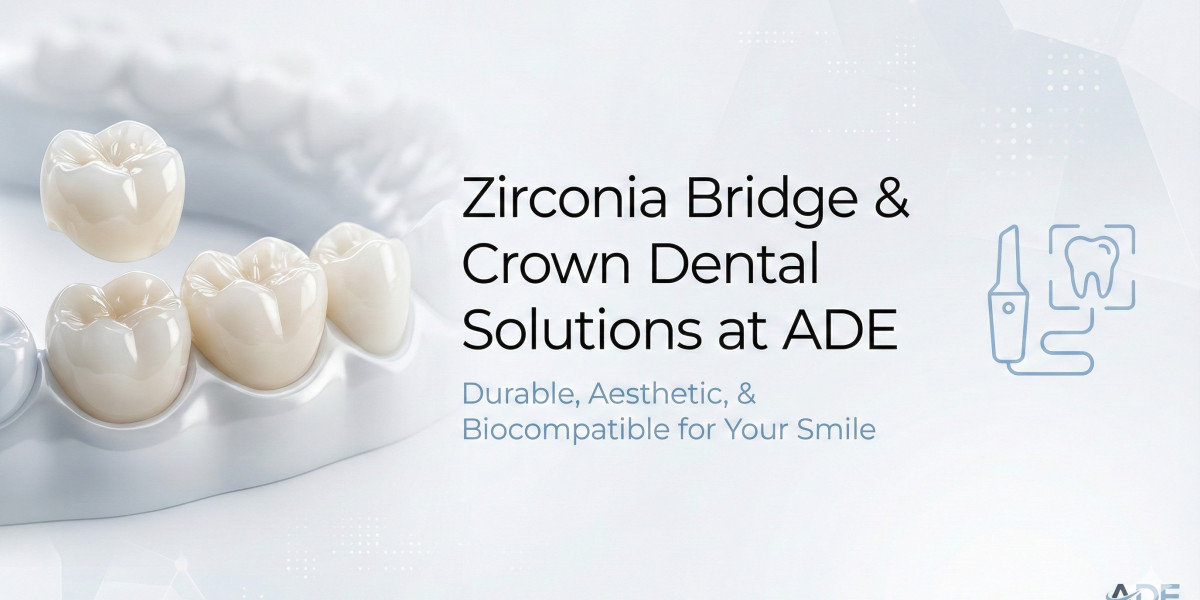

Dental Solutions for Missing Teeth: The Advantages of Zirconia Bridges
Missing teeth affects more than just appearance. They can compromise chewing efficiency, speech clarity, jawbone health, and overall oral confidence. Modern dentistry offers several restorative solutions, and among them, zirconia bridges have emerged as one of the most reliable, aesthetic, and durable options. Backed by advanced dental technology and laboratory precision, zirconia bridges represent a significant step forward in fixed prosthodontics.
Advance Dental Export, a specialized dental laboratory focused on precision-crafted restorations, works closely with dental professionals worldwide to deliver zirconia bridges that meet the highest clinical and aesthetic standards—dental Solutions Offered at ADE.
Understanding Dental Bridges for Missing Teeth
A dental bridge is a fixed prosthetic restoration designed to replace one or more missing teeth by anchoring an artificial tooth (pontic) to adjacent natural teeth or dental implants. Bridges restore functional bite alignment, prevent neighboring teeth from shifting, and maintain facial structure.
Traditional bridge materials have included metal alloys and porcelain-fused-to-metal (PFM). While effective, these materials can present aesthetic limitations and long-term biological concerns. Zirconia bridges address many of these challenges through superior material science.
What Is Zirconia?
Zirconia, or zirconium dioxide, is a high-strength ceramic material widely used in modern dentistry. Originally adopted in orthopedic medicine, zirconia has proven exceptional for dental restorations due to its unique combination of strength, biocompatibility, and aesthetics.
Dental-grade zirconia is milled using CAD/CAM technology, ensuring accuracy, consistency, and optimal fit. This makes it an ideal choice for both anterior and posterior bridges.
Key Advantages of Zirconia Bridges
1. Exceptional Strength and Durability
Zirconia is one of the strongest materials used in restorative dentistry. It can withstand high occlusal forces, making it particularly suitable for posterior bridges where chewing pressure is greatest. With proper design and fabrication, zirconia bridges offer long-term performance and resistance to fractures or chipping.
2. Superior Aesthetics
Modern translucent zirconia closely mimics the natural appearance of teeth. Unlike metal-based restorations, zirconia eliminates the risk of dark margins at the gum line and allows for excellent light transmission. This results in restorations that blend seamlessly with surrounding natural teeth.
3. Biocompatibility and Tissue Friendliness
Zirconia is highly biocompatible and well-tolerated by oral tissues. It does not corrode, release metal ions, or cause allergic reactions. Gingival tissues around zirconia restorations tend to show excellent response, contributing to long-term periodontal health.
4. Precision Fit Through Advanced Technology
Zirconia bridges are fabricated using CAD/CAM systems that ensure micron-level accuracy. A precise fit reduces the risk of bacterial leakage, secondary caries, and restoration failure. Dental laboratories with advanced digital workflows play a critical role in achieving this precision.
5. Minimal Tooth Preparation
Due to zirconia’s high strength, restorations can be designed with reduced thickness while maintaining durability. This allows clinicians to preserve more natural tooth structure during preparation, supporting conservative treatment principles.
6. Metal-Free Solution
For patients seeking holistic or metal-free dental treatments, zirconia bridges provide an excellent alternative. They are radiopaque for diagnostic clarity while maintaining a clean, non-metallic composition.
Zirconia Bridges vs. Traditional Alternatives
| Feature | Zirconia Bridges | PFM Bridges | Metal Bridges |
|---|---|---|---|
| Aesthetics | Excellent, natural translucency | Moderate | Poor |
| Strength | Very high | High | Very high |
| Biocompatibility | Excellent | Good | Variable |
| Metal-Free | Yes | No | No |
| Gingival Response | Favorable | Can discolor | Often compromised |
Zirconia bridges provide a balanced solution by combining strength comparable to metal with aesthetics superior to porcelain-fused systems.
The Role of a Specialized Dental Laboratory
The success of zirconia bridges depends not only on material choice but also on laboratory expertise. Precise design, controlled sintering, proper shading, and finishing are essential for predictable clinical outcomes.
Advance Dental Export focuses on delivering high-quality zirconia restorations through:
Advanced CAD/CAM milling systems
Strict quality control protocols
Custom shading and contouring for natural aesthetics
Collaboration with dentists for case-specific requirements
Such laboratory-driven precision ensures restorations that fit accurately, function efficiently, and meet patient expectations.
Ideal Candidates for Zirconia Bridges
Zirconia bridges are suitable for patients who:
Have one or more missing teeth
Require a fixed, non-removable solution
Prefer metal-free restorations
Need strong posterior bridges
Seek long-lasting, aesthetic results
A comprehensive clinical evaluation is essential to determine suitability based on occlusion, periodontal health, and overall oral condition.
Conclusion
Zirconia bridges represent a modern, scientifically advanced solution for replacing missing teeth. Their strength, aesthetics, biocompatibility, and precision make them a preferred choice in contemporary restorative dentistry. When combined with expert laboratory craftsmanship and digital technology, zirconia bridges deliver predictable, long-term success.
Through innovation, research-driven processes, and a commitment to excellence, Advance Dental Export continues to support dental professionals by providing high-quality zirconia bridge solutions that meet the evolving demands of modern dentistry.